


Mallorca’s PP-led Government will honour Palma’s 1937 bombing victims as Memòria de Mallorca demands that the memory law remain in force.

The People's Party-led Balearic Government plans to hold an institutional ceremony in Palma on 27 July 2026 for the civilian victims of Republican bombing raids on the city during the Spanish Civil War. The event comes after the Balearic Parliament voted to repeal the region’s democratic memory law, a decision now suspended by Spain’s Constitutional Court, and after Memòria de Mallorca made its attendance conditional on the Government reversing course. The elDiario.es report on the planned Palma ceremony places the dispute at the centre of a wider question: whether institutions can honour victims while removing the legal framework that memorial groups say protects their recognition.
A ceremony shaped by an unresolved legal dispute
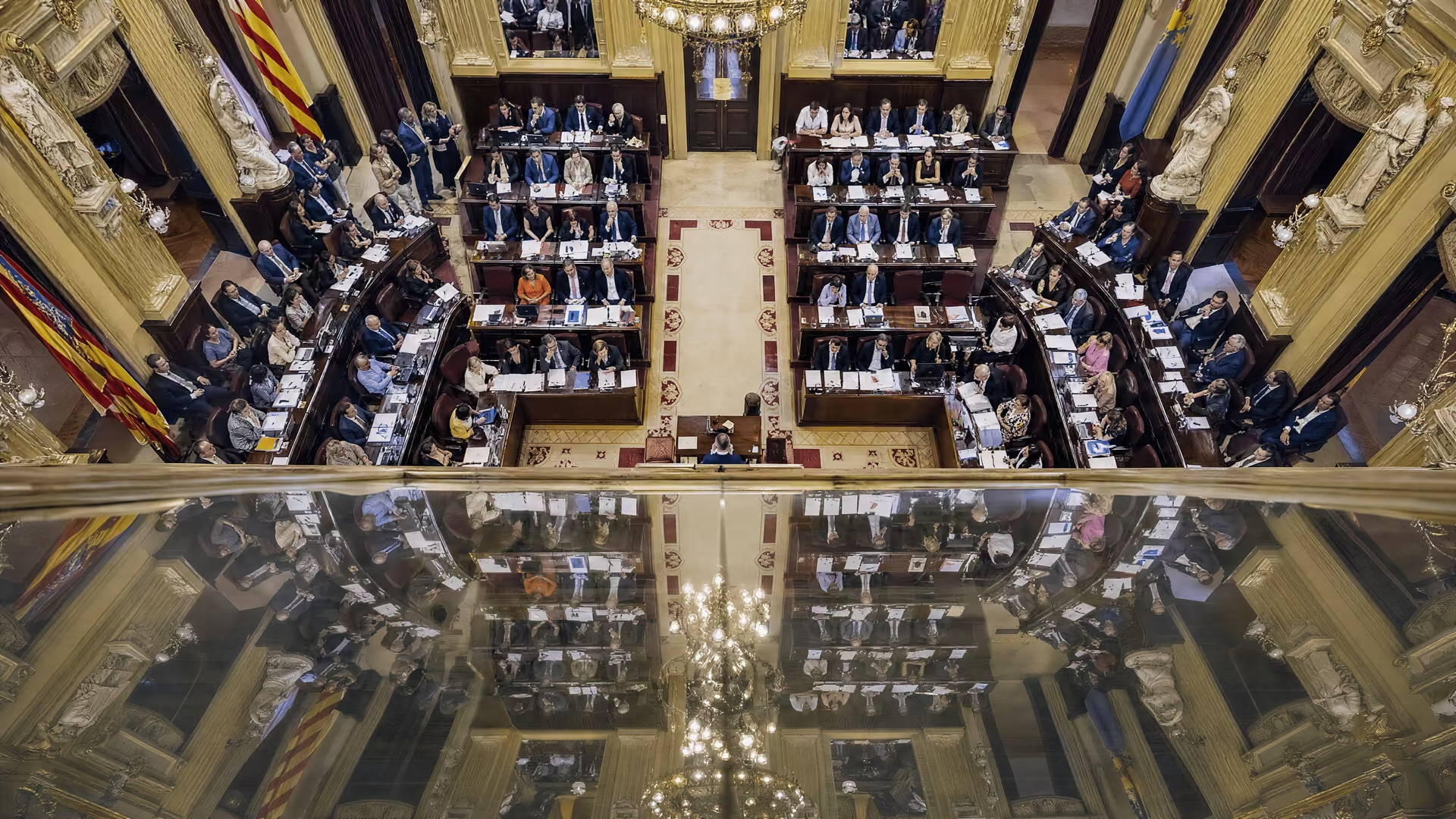
The Balearic Government, led by Marga Prohens of the People's Party, is due to commemorate the civilians killed in the bombing of Palma on 24 May 1937. The planned event is not taking place in a neutral political setting. On 10 March, the PP and Vox completed the repeal of the Balearic Law 2/2018 on democratic memory and democratic recognition, fulfilling a commitment made by the two parties during the current legislature.
That repeal is not currently operating as an uncontested change in regional law. The Spanish Government challenged it before the Constitutional Court, arguing that removing the legislation could affect the rights of victims of serious human-rights violations, the division of powers between Spain and its autonomous communities, and constitutional principles including legal certainty. The Constitutional Court admitted the challenge and suspended the repeal as a precautionary measure, meaning the law remains in force while the court considers the substance of the case.
Memòria de Mallorca says the ceremony would be the first institutional invitation it has received from the Balearic Government during the legislature. The association has nevertheless told the regional president that it will attend only if the Executive publicly commits, before 27 July, to maintaining Law 2/2018 and supports a vote in the Balearic Parliament to reverse the repeal.
The scene the Government is preparing is therefore also a test of how the Balearic institutions define public memory:
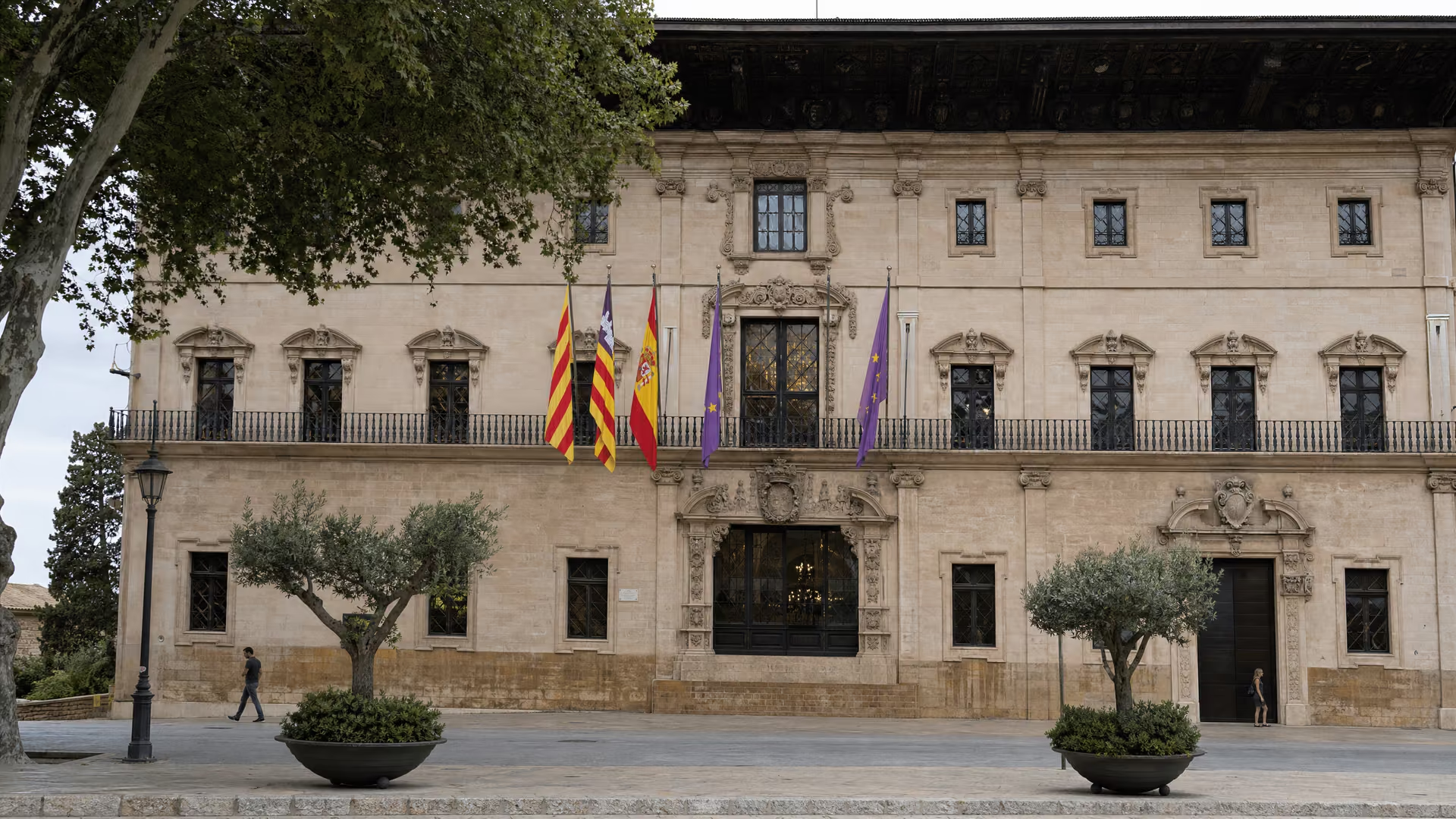
The Palma attacks and the civilians remembered
The commemoration concerns Republican air raids carried out over Palma on 24 May 1937. The attacks were directed at military objectives, according to the supplied reporting, but caused serious consequences in neighbourhoods and commercial areas of the city. Women and children were among those killed, and the victims remained largely overlooked for decades.
Research by historian Manuel Aguilera has recovered the identities of at least 86 civilian victims of the Republican bombings over Mallorca. The figure helps explain why the Government has described the event in terms of a much larger group of civilians, while also showing why the work of identifying individuals remains central to memorial organisations. The research identifying Palma’s bombing victims gives the planned ceremony a documented human basis rather than leaving the dead as an anonymous wartime total.
The principal dates and figures at the centre of the dispute are:
Memòria de Mallorca has not questioned the need to recognise those civilians. In its statement, the association expressed respect, solidarity and recognition for all the victims of the bombings. Its objection is directed at the political and legal setting of the event: it argues that the same Government that removed the memory law is now relying on principles that, in its view, derive from that legislation.
Why Memòria de Mallorca may stay away
The association’s conditions
The memorial association has set out two linked demands before it will join the institutional act:
- The Balearic Government must publicly commit to keeping Law 2/2018 on democratic memory and democratic recognition in force.
- The Executive must promote a vote in the Balearic Parliament to revoke the earlier decision to repeal the law.
- The Government must explain the role of the Commission for Democratic Memory, which the association says was excluded from preparations for the ceremony.
The association is a member of the Commission for Democratic Memory as a representative of the memorial movement. It says the commission was neither informed nor involved in organising the event, despite being the body established by the law to coordinate public memory policies. Memòria de Mallorca also says the commission has been convened only twice in more than three years of the legislature.
That complaint adds an institutional dimension to the disagreement. The issue is not only whether the Government has invited a particular organisation, but whether the statutory body intended to coordinate memory policy has been used in the preparation of an act grounded in that policy.
The association describes the decision to honour victims while maintaining the political intention to eliminate the law that protects their rights as contradictory and unacceptable.
Memòria de Mallorca
Memòria de Mallorca says its preferred framework for democratic memory is based on truth, justice, reparation, guarantees of non-repetition and the remembrance of victims. It argues that those rights are fully protected only when legislation, institutions and political willingness to apply them operate together.
How the repeal became a live constitutional issue
The conflict has developed through a series of political and legal decisions rather than through the ceremony alone. The Balearic memory law was one of the earliest regional frameworks in Spain for investigating Franco-era crimes and publicly recognising people who suffered repression after the 1936 military coup. Its repeal therefore removed a regional structure that had been used to organise investigations, recognition and public policy on democratic memory.
The main milestones are:
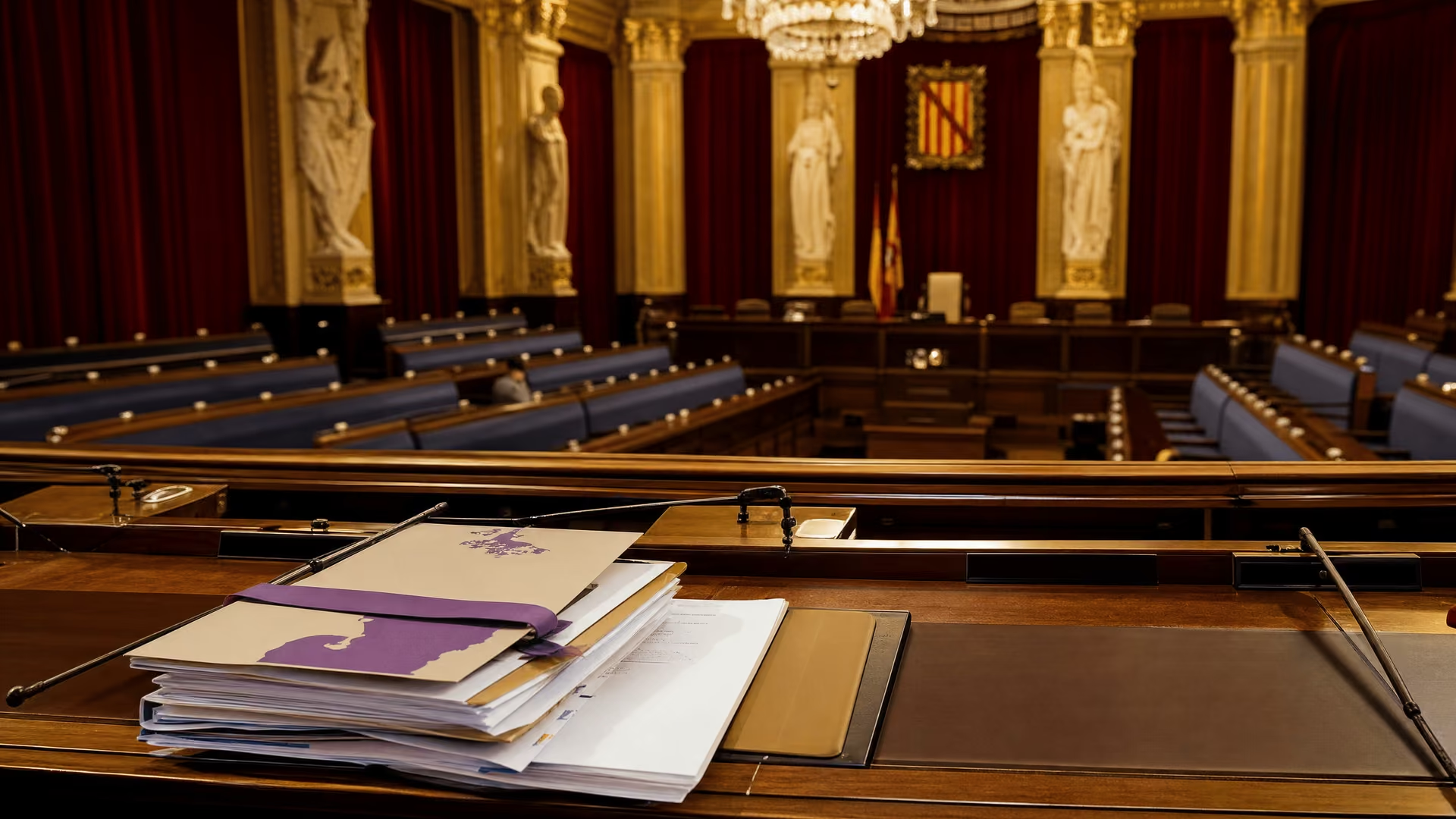
The Constitutional Court’s precautionary suspension of the repeal does not settle the case. It does, however, alter the immediate context of the ceremony: the law that Memòria de Mallorca wants preserved is still legally active while the court reviews the Spanish Government’s arguments.
A broader promise to remember victims across the islands
The planned Palma event also follows a commitment by the Balearic Parliament to recognise civilian victims of bombing raids across the islands, not only those killed in the Republican attack on Palma. On 4 February, every parliamentary group, including the PP and Vox, supported a non-binding motion promoted by the PSIB-PSOE. It called for an institutional act honouring all civilian victims of the bombings suffered in the Balearics during the Civil War, without distinction of side.
The motion described the victims as part of the shared tragedy of the war and said their pain should receive recognition and moral reparation from democratic institutions. It also stated that memory should contribute to coexistence and peace. The Parliamentary motion on recognising all Civil War bombing victims provides the clearest formal basis for treating the ceremony as a recognition of civilian suffering rather than as an honour limited to one political camp.
The wider island history is complex. On 13 September 1936, attacks by Italian fascist aircraft based in Mallorca killed and injured civilians in Ibiza and caused major damage to the port and other parts of the city. On 29 May 1937, a Republican squadron bombed Ibiza in retaliation for the attack on the German cruiser Deutschland, again causing civilian deaths. Menorca also suffered air and naval bombardments during the final months of the war.
That history helps explain the wording adopted by the Balearic Parliament. The motion did not distinguish between victims according to the side responsible for the attack. The immediate dispute, however, remains focused on Palma, the 24 May 1937 bombings and the decision by Memòria de Mallorca to condition its attendance on the future of the regional memory law.
The institutional positions can be set out plainly:
| Actor | Recorded position or action | Immediate significance | Source |
|---|---|---|---|
| Balearic Parliament | Approved recognition of all civilian bombing victims without distinction of side | Creates a broad parliamentary basis for the planned homage | Parliamentary motion report |
| Spanish Government and Constitutional Court | The Spanish Government challenged the repeal; the court suspended it as a precaution | Law 2/2018 remains in force while the constitutional case continues | Constitutional Court report |
The decision before 27 July
The Balearic Government’s next step is clear in practical terms: it must decide whether to alter its position on Law 2/2018 before the ceremony, or proceed with the event knowing that Memòria de Mallorca may not attend. The association has already written to President Prohens to communicate that condition.
For the Government, the ceremony fulfils a parliamentary request to recognise civilian victims and gives public visibility to a part of Palma’s wartime history that was left in the background for decades. For Memòria de Mallorca, participation without a commitment to the law would risk separating recognition of the dead from the institutional guarantees it believes are necessary to protect their memory.
The Constitutional Court’s intervention means that the disagreement is not simply about whether the law should exist. It is also about what regional institutions may do while Spain’s highest constitutional jurisdiction reviews the repeal. Until the court rules on the substance, the Balearic Government’s planned homage will take place alongside a law that remains provisionally valid and an association demanding that its permanence be acknowledged.
The main points for readers in Mallorca and across the Balearic Islands are:
The Palma ceremony is therefore set to carry two messages at once: recognition of civilians killed during the Civil War and a continuing dispute over the legal framework used to remember them. Whether Memòria de Mallorca joins the event will depend on whether the Balearic Government treats the suspended memory law as an obligation to preserve, rather than only as a measure it has voted to remove.
Sources
- L'Ajuntament de Bunyola implantarà prop de 2.900 comptadors intel·ligents amb telelectura per modernitzar la gestió de l'aigua al municipi (mallorcaconfidencial.com)
- Santanyí entra de lleno en la semana grande de las fiestas de Sant Jaume (mallorcaconfidencial.com)
- Vecinos y visitantes se vuelcan con la campaña de dinamización comercial del verano de Santanyí (economiademallorca.com)
- El Consell de Mallorca y Ecovidrio promueven el reciclaje en 800 hoteles de la isla (economiademallorca.com)
- Programa especial ‘Al Dia Pitiüses’ d’IB3 Ràdio a Formentera per les festes de Sant Jaume (ib3.org)
- El Temps Migdia 23-07-2026 (ib3.org)
- El Principal de Palma obre la nova temporada amb La Zaranda i 'Quiso negro' (arabalears.cat)
- Els tècnics desaconsellen els aires portàtils malgrat que les vendes s'han disparat un 30% (arabalears.cat)
- El PP homenajeará a las víctimas de los bombardeos republicanos en Palma tras derogar la Ley de memoria democrática (eldiario.es)
- La avispa oriental despierta las alarmas en Ibiza: "Es letal para las abejas" (eldiario.es)