


Timekeeping rules 2026 in Mallorca and the Balearics: what Spain’s proposed digital register changes, who is affected and how to prepare.

Spain’s Government is preparing a 2026 overhaul that could require every business with employees in Mallorca and the wider Balearics to replace editable paper or spreadsheet records with more traceable digital timekeeping systems, according to Economia de Mallorca’s report on the 2026 timekeeping reform. The existing duty to record employees’ working time would not be entirely new; the proposed change concerns how reliably those records are created, protected and made available to Spain’s Labour Inspectorate.
Spain is preparing a stricter digital record
For employers in Palma, Mallorca’s towns and the other Balearic islands, the most important distinction is between a rule that already exists and a reform that is still being prepared. Businesses with staff already have to keep a record of employees’ working hours. The planned step would make the record more digital, traceable and resistant to later alteration.
The proposal is being presented as a way to make recorded hours match the hours actually worked, rather than as an entirely new obligation. That matters for small shops, restaurants and service companies across the islands, where attendance may still be recorded on paper or in editable spreadsheets. The Ministry of Labour is seeking a system that can be checked more closely by the Labour Inspectorate and that leaves a dependable record of when a working day begins and ends.
The reform’s status should therefore be kept clear. The source describes a government-prepared change and a draft approach, not a fully detailed final text already in force. Until the wording is approved, employers must distinguish between the current obligation to register employees’ working time and the additional technical standards that may be introduced.
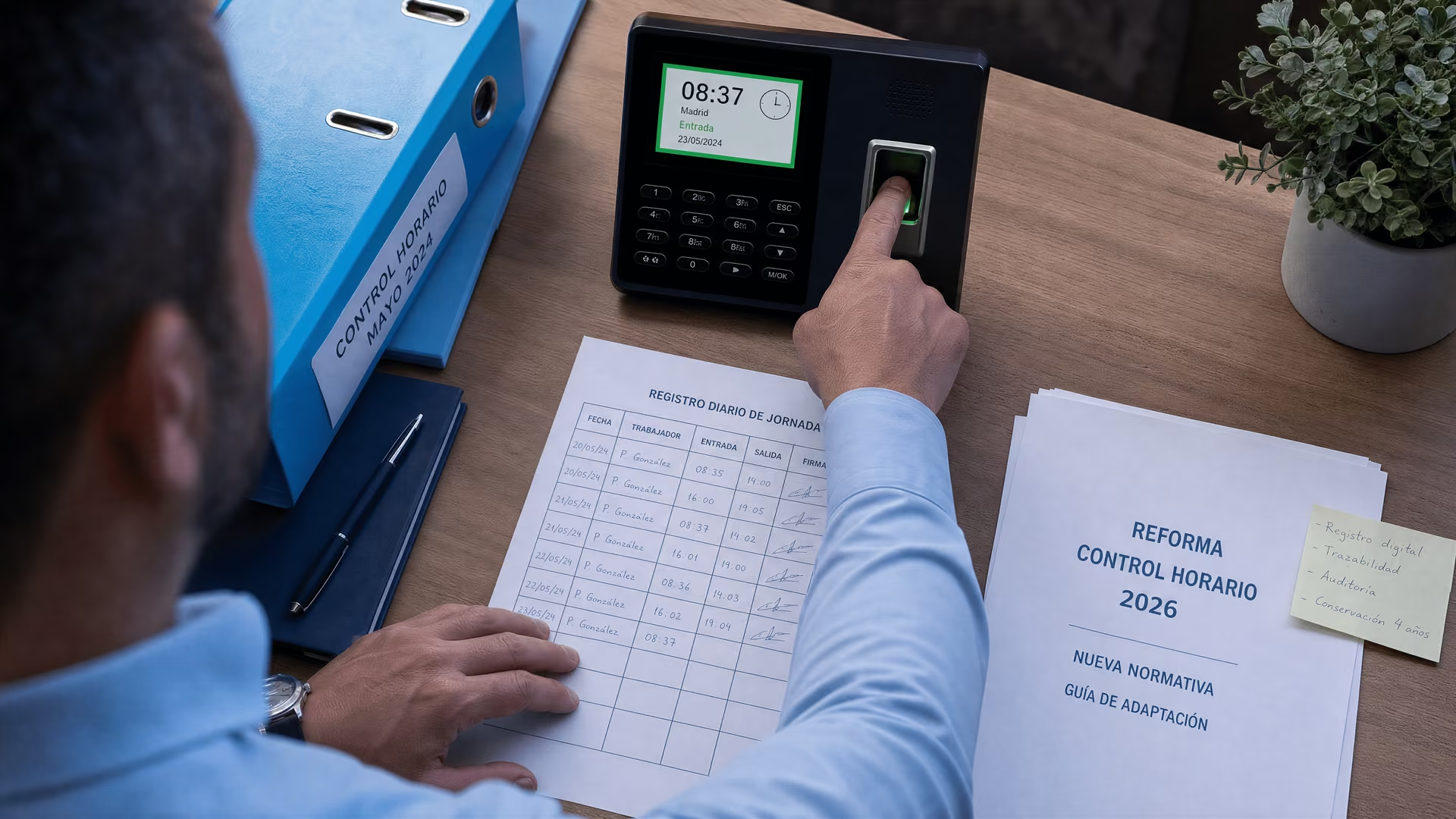
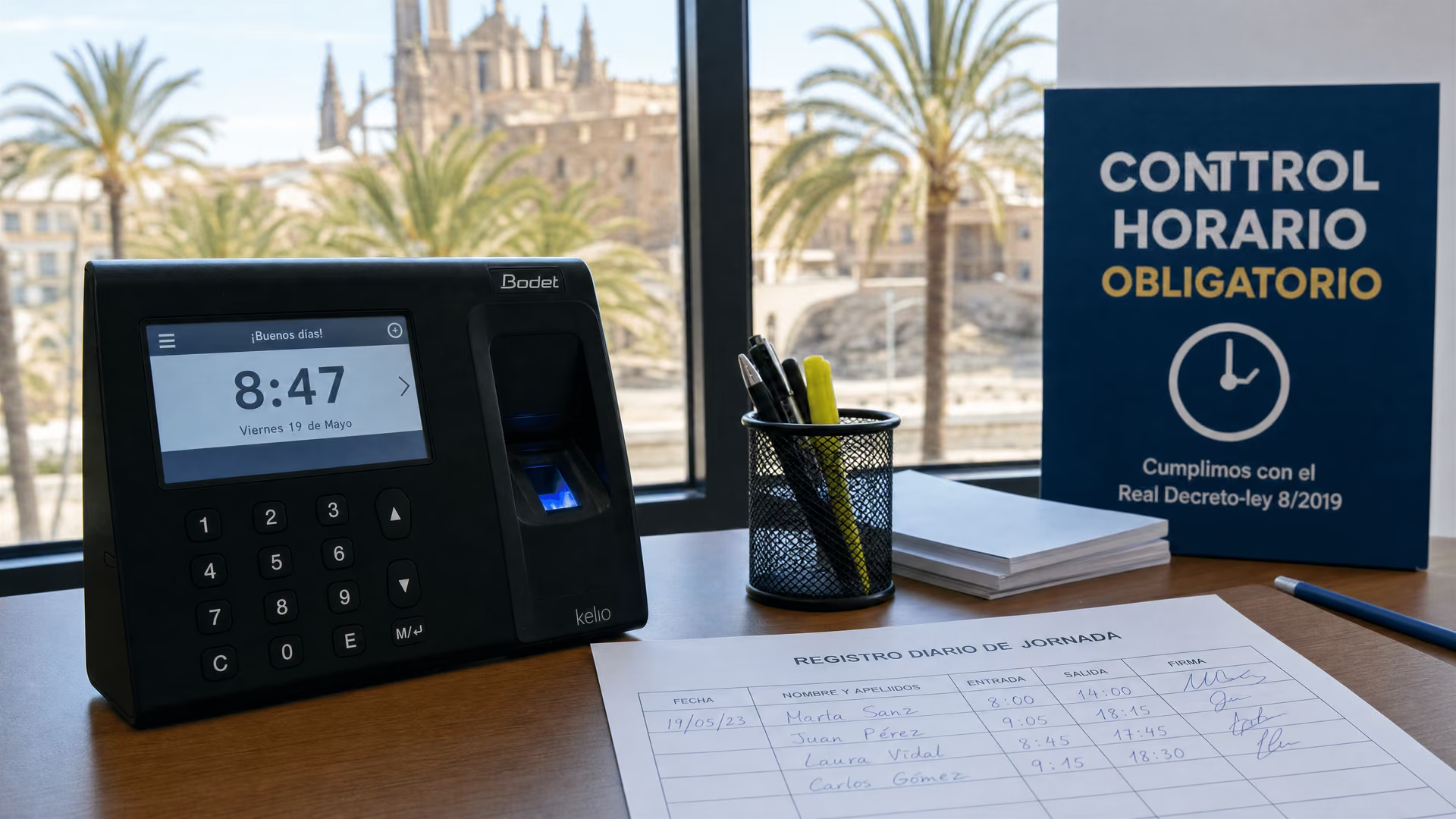
A Palma workplace desk with paper attendance sheets beside a digital terminal would capture the practical transition employers are being asked to consider:
What the proposed 2026 rules would change
The reform outline reported by Economia de Mallorca focuses on the reliability of the record. The concern is that a handwritten sheet can be changed with a pen and an editable spreadsheet can be altered by deleting or rewriting a cell. The proposed model would place greater responsibility on the employer to preserve an authentic record.
The main changes described in the report are:
- Greater digitalisation of the working-time register, replacing older methods of clocking in and out.
- The planned removal of traditional paper attendance sheets because they can be difficult to verify.
- Protection against later modifications, with the chosen system expected to prevent records being altered after the event.
- Accurate capture of the moment an employee starts and finishes the working day.
- Closer recording of breaks and overtime, allowing excessive working hours to be identified.
- Permanent availability of the records so they can be consulted at the workplace when required.
- A draft provision allowing Spain’s Labour Inspectorate to connect remotely to the system and carry out checks in real time.
- Employer responsibility for the legal authenticity of stored records if they are found to have been manipulated.
This is more than a change in the appearance of a timesheet. It would affect the chain of evidence around working hours: when an employee arrived, when the shift ended, how breaks were recorded and whether overtime was visible. The stated aim is to make the register useful for enforcement rather than a formality completed after the working day.
The duty already covers Balearic employers with staff
The proposed digital register is not limited to large companies. The account from Mallorca states that the rules apply regardless of the size of the workforce when a business has employees. That includes microbusinesses, small and medium-sized companies and large corporations operating in Mallorca, Ibiza, Menorca or elsewhere in the Balearics.
A person working alone as a self-employed operator is treated differently under the described framework. The timekeeping duty is intended to protect employees working for an employer, not to record the hours a business owner spends running a business without staff. The distinction can be summarised as follows:
| Area | Current position | Proposed 2026 direction | Source |
|---|---|---|---|
| Who is covered | Businesses with employees must record working time; company size does not remove the duty. | The same coverage is expected to remain while the technical standard becomes stricter. | Economia de Mallorca report |
| A sole self-employed worker | A person working alone, with no employees, is outside the described employee timekeeping duty. | The proposal is not described as a system for recording the owner’s own working hours. | Economia de Mallorca report |
For Balearic employers, that means the first question is not whether the company is a restaurant, shop, consultancy or large corporation. It is whether the business has employees. If it does, the existing obligation applies, and the proposed reform would determine how secure and accessible the record must be.
Why traceability matters to Spain’s Labour Inspectorate
The proposed system is built around traceability. A register that can be edited after an employee has signed it gives inspectors less certainty about whether the recorded hours reflect reality. A system designed to protect entries from later alteration would create a clearer record of the working day and place the responsibility for its authenticity with the employer.
The record must follow the working day
The reported changes cover more than clocking in and out. They also point to closer scrutiny of intermediate breaks and overtime. For employers, that means a system may need to show not only the start and finish of a shift, but also the interruptions that occur between them. The practical objective is a record that can be understood without relying on a handwritten explanation or a spreadsheet that has been revised later.
The draft also contemplates records being available for immediate consultation at the workplace and inspectors being able to access the system remotely in real time. That would change the relationship between the employer’s records and the Labour Inspectorate: the register would need to be maintained as an active compliance record rather than assembled only when an inspection is announced.
The proposed reform is not presented as a new duty to record hours, but as a stricter test of whether recorded hours match reality.
Reported reform outline
The possible consequences are therefore procedural as well as technical. If the stored data are found to have been adulterated, the employer would carry the legal responsibility identified in the proposal. The report links that stronger accountability to the Ministry of Labour’s intention to make workplace monitoring more immediate and demanding.
How Mallorca businesses can prepare before the final text
The most practical response for an employer in Mallorca or the wider Balearics is to audit the current process against the features described in the source’s compliance outline. Preparation does not mean treating a draft as final law; it means identifying where a paper or editable process could fail if the proposed standards are adopted:
- Confirm who is covered by the existing duty by identifying every employee working for the business, including staff in small teams and seasonal or changing operations.
- Map how start times, finish times, breaks and overtime are currently recorded, and identify any point at which a record can be rewritten after the working day.
- Review whether the present method can capture the exact beginning and end of each employee’s working day rather than relying on a later signature or manual summary.
- Assess whether records can be kept available for consultation at the workplace and retrieved without reconstructing them from separate paper files or spreadsheets.
- Prepare for the possibility of remote, real-time access by checking how the business would provide the records to Spain’s Labour Inspectorate if that draft provision becomes law.
- Assign responsibility for the authenticity and preservation of the data, since the proposed framework places legal responsibility on the employer if stored records have been adulterated.
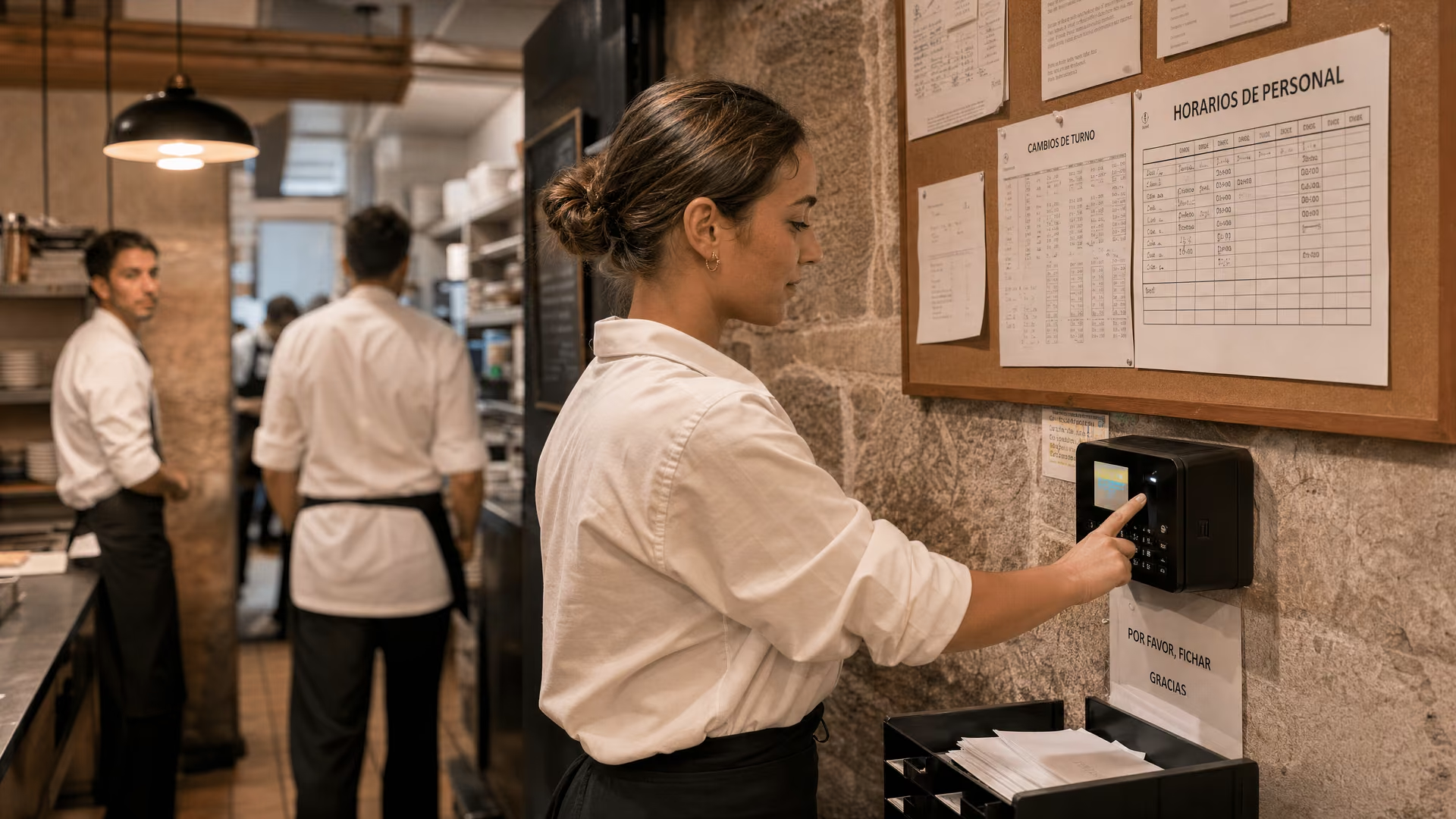
This checklist is especially relevant to employers still using paper sheets or editable Excel files. It does not identify a particular commercial system, and the final technical requirements have not been supplied in the source. Its purpose is narrower: to test whether the current process records the working day accurately and protects the record from later manipulation.
A Mallorca employer reviewing those questions might begin with the physical point where staff currently sign in and then trace the record through storage and inspection:
Variable shifts and remote work create the practical test
The legal obligation may be universal, but the operational challenge will not look the same in every Balearic workplace. The report points to businesses with variable schedules and split shifts as areas where the move to a digital register may be more complicated. Commerce and hospitality are obvious examples because staffing levels and working periods can change during the day or with the season.
The same issue applies to employees who work remotely or move between locations. A system that only functions at a fixed counter in one workplace may not provide a clear record for staff whose working day begins away from the main premises. The source identifies teleworking and mobile personnel among the arrangements where fitting the new digital process into daily operations may require particular attention.
- Variable schedules require a clear way to record different start and finish times without later manual reconstruction.
- Split shifts make breaks and the return to work part of the record, not an informal detail.
- Teleworking raises the question of how the start, end and interruptions of the working day are captured away from the main workplace.
- Displaced staff require records that remain available and reliable even when the employee is not working at the usual business premises.
The point is not that every business must use an identical workflow. It is that the method must be able to document the working day consistently across the arrangements the employer actually uses. The proposed rules would judge the reliability of the record, not simply whether a worker has signed a sheet.
What employers and workers should watch next
The central uncertainty is the final wording of Spain’s reform. The report describes the direction of travel—digital records, protection against modifications, detailed treatment of breaks and overtime, permanent availability and possible remote inspection access—but it does not provide a final implementation timetable or a completed technical specification.
For employers in Mallorca and the other islands, the immediate task is therefore twofold: continue meeting the existing obligation to record employees’ working time, and examine whether the current method would withstand the stricter standards being prepared. Workers, meanwhile, should understand that the proposed reform is intended to make the hours recorded by the employer more closely reflect the hours actually worked.
The main questions raised by the 2026 proposal are:
Timekeeping rules 2026: key questions
Is employee timekeeping already mandatory in Mallorca?
Yes. The source states that recording employees’ working time is already mandatory for any business with employees. The proposed reform would strengthen the format, traceability and inspection of those records.
Will the proposed rules apply only to large companies?
No. The described approach does not distinguish between microbusinesses, small and medium-sized companies and large corporations when they employ staff.
Does a self-employed person working alone have to record their own hours under the described rule?
No. The source states that a self-employed person without employees is not required to keep this employee time record.
Will paper sheets and editable spreadsheets be enough under the proposed reform?
The proposal seeks to eliminate methods that can be easily altered, including traditional paper records and editable spreadsheets. The final legal wording remains to be confirmed.
What must the proposed system record?
The reported outline refers to the exact start and end of the working day, breaks, overtime and records that remain available for consultation and protected from later manipulation.
Could Spain’s Labour Inspectorate access records remotely?
The draft described in the report contemplates remote, real-time access for inspectors. Whether and how that provision will operate depends on the final regulation.
For Mallorca businesses, the 2026 timekeeping debate is about the credibility of the record as much as the act of recording hours. The existing duty remains the starting point, while Spain’s proposed reform would demand a more secure and accessible account of each working day. Until the final text is approved, employers should avoid assuming that every draft detail is already law, but they can begin by testing whether paper, editable spreadsheets and informal procedures would provide the traceability the new framework is designed to require.
Sources
- Rescatan en helicóptero a una mujer con dolor torácico en cala Falcó, Calviá (mallorcaconfidencial.com)
- Más de 563.000 agricultores y ganaderos presentan la solicitud única de la PAC para 2026 (mallorcaconfidencial.com)
- Cap Vermell Grand Hotel refuerza su estrategia de marca con un equipo propio en la Copa del Rey MAPFRE de Vela (economiademallorca.com)
- Control horario 2026: ¿Qué ha cambiado y cómo cumplir la normativa? (economiademallorca.com)
- Minva la demanda a càmpings d’Eivissa (ib3.org)
- La calor espanta els clients del servei de migdia dels restaurants menorquins (ib3.org)
- Un secret ben estotjat (arabalears.cat)
- Què volen dir les Ítaques (arabalears.cat)
- Un eclipse sin promoción turística en las islas que duplican su población en verano (eldiario.es)
- La fiebre por el eclipse dispara las reservas en bares, hoteles y 'beach clubs' de Mallorca: "Nos llaman de Indonesia" (eldiario.es)