


Quick Answer
No — Mallorca has no Amsterdam-style coffeeshops. There is no shop, café, or counter anywhere on the island where cannabis can be legally bought and consumed by walk-in customers, tourists included. What Mallorca does have is a network of private, members-only Cannabis Social Clubs (CSC) — associations where members collectively grow and share cannabis for personal, non-commercial use. Spain's law tolerates private cannabis consumption in a legal gray area; it does not license retail sale. Below we explain exactly what the word "coffeeshop" gets confused for, how the CSC model actually works, what you'll realistically find in each resort area, and how to access a club as a visitor through Fast-Track membership.
Introduction
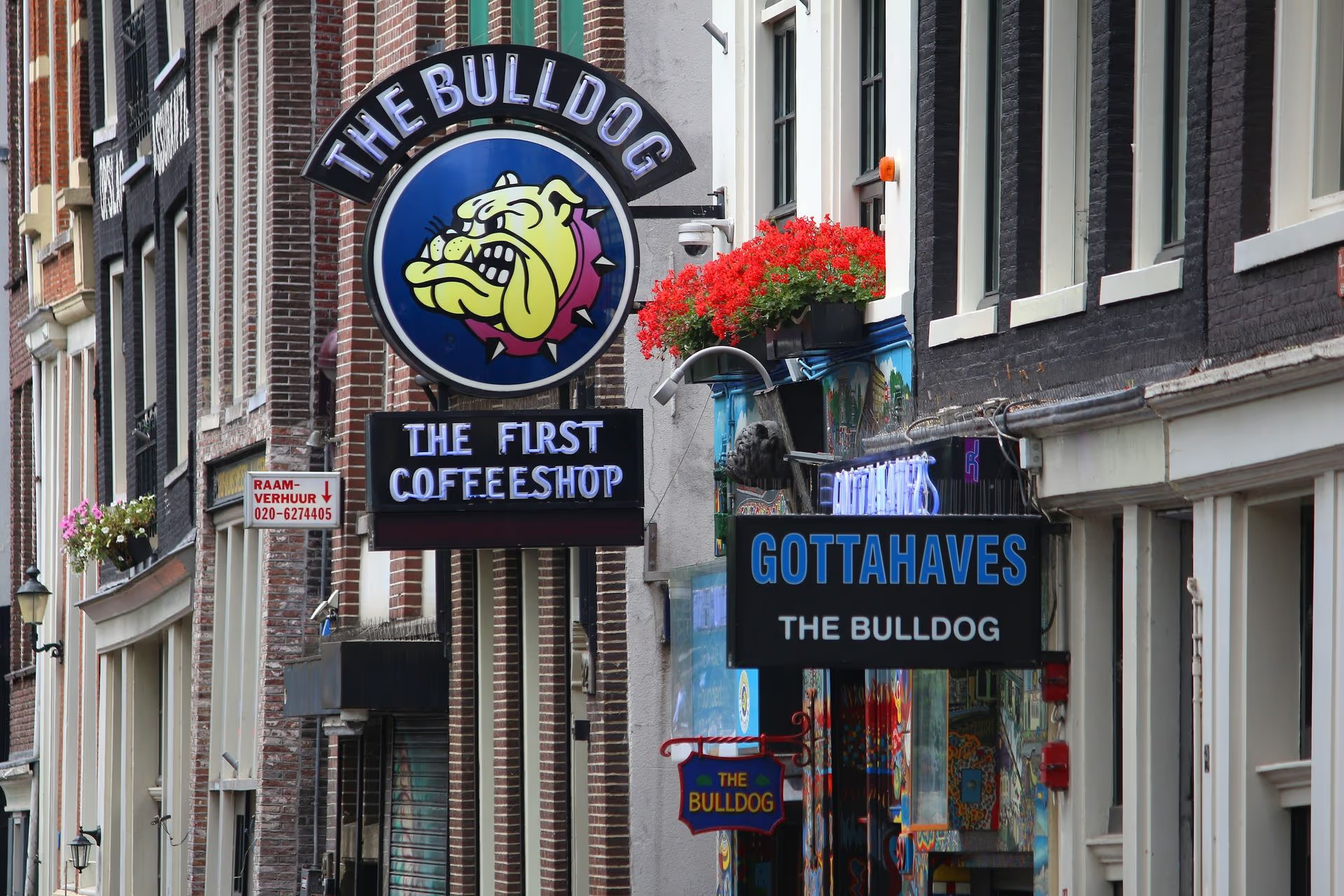
Coffeeshops are well-known worldwide and are particularly popular in the Netherlands. Many tourists visit Amsterdam and other Dutch cities to experience the relaxed atmosphere and legal availability of cannabis in coffeeshops. But what about Mallorca? Here, there are no coffeeshops in the Dutch sense, but rather what are known as Social Clubs. In this article, we explain the differences between these two concepts, what the search term "coffeeshop Mallorca" actually leads people to look for, and give an honest, resort-by-resort overview of the Social Clubs on Mallorca.
What "Coffeeshop" Actually Means (and Why It Doesn't Apply Here)
Every year, thousands of visitors search for "coffeeshop Mallorca", "weed cafe Mallorca", "cannabis cafe Palma" or check apps like Weedmaps expecting an Amsterdam-style experience. It's worth being precise about what these terms mean, because none of them describe anything that legally exists on the island:
- Coffeeshop — a Dutch licensed retail outlet that sells small quantities of cannabis over the counter to any adult, with no membership required. This model exists only in the Netherlands under a specific national tolerance policy.
- Weed cafe / cannabis cafe — informal English terms for the same Dutch concept, sometimes used loosely for any venue associated with cannabis. There is no equivalent open-door venue on Mallorca.
- Dispensary — a licensed cannabis retail or medical-cannabis store, common in parts of the US and Canada. Spain has no legal recreational or retail dispensary system; see our dedicated dispensary comparison guide for the full breakdown.
- Weedmaps / cannabis delivery apps — these platforms are built around US-style licensed retail and delivery. Listings that appear to cover Spain are typically informational, unrelated third parties, or simply inaccurate for this jurisdiction; no licensed retailer exists here to list. See our delivery guide for the honest version.
- "420-friendly" — commonly used online to mean a venue is cannabis-tolerant. In Spain this label has no legal meaning; consumption in any public place, "420-friendly" branding or not, is still a finable offence (see Legal Aspects).
What genuinely exists — and what this guide is actually about — is the Spanish Cannabis Social Club: a private, non-profit members' association. It solves a similar underlying need (a safe, social place to consume cannabis) through a completely different legal mechanism: private membership rather than public retail.
Differences Between Coffeeshops and Social Clubs
Legal Status
A significant difference between coffeeshops and social clubs lies in their legal status. In the Netherlands, coffeeshops are legal and subject to strict regulations. They can sell cannabis in small amounts and often have a limited stock. These shops must comply with specific laws, including no advertising for cannabis, no sales to minors, and no large stockpiles.
Conversely, social clubs in Spain operate in a legal gray area. They are based on a club model where members collectively grow and consume cannabis. Social clubs are not commercial and are not allowed to make profits. The clubs must be strictly private, meaning they cannot advertise and access is only possible for members.
Access and Membership
Access to coffeeshops in the Netherlands is relatively easy. Any adult can enter a coffeeshop and purchase cannabis products without being a member. This openness makes coffeeshops particularly attractive to tourists and occasional consumers.
Social clubs in Spain, however, are private associations. Access is limited to members only, and traditionally an invitation from an existing member was required to join. This creates a more exclusive and intimate atmosphere as the number of members is limited and the focus is on community — see Membership and Access below for how visitors realistically join today.
Atmosphere and Culture
The atmosphere in coffeeshops and social clubs also differs significantly. Coffeeshops in the Netherlands are often more commercial and tourist-oriented. They are designed to appeal to a broad public, with a relaxed, yet busy environment where people can come and go.
Social clubs in Spain offer a more private and communal atmosphere. Since they are accessible only to members, they promote a closer community and social interactions. Members often know each other, and there are regular meetings and events that strengthen the community spirit.
Products and Services Offered
In coffeeshops, customers can buy a variety of cannabis products, including different strains of marijuana, hashish, edibles, and sometimes accessories like pipes and vaporizers. The products are often focused on quality and variety to cater to the diverse preferences of customers.
Social clubs focus on communal growing and consumption of cannabis. The range of products can vary but is generally limited to what the members themselves grow. The focus here is more on quality and the communal aspect of consumption rather than commercial interests.
Rather than buying weed over the counter, members access indica and sativa strains that vary in THC and CBD at the island's cannabis social clubs.
Legal Aspects
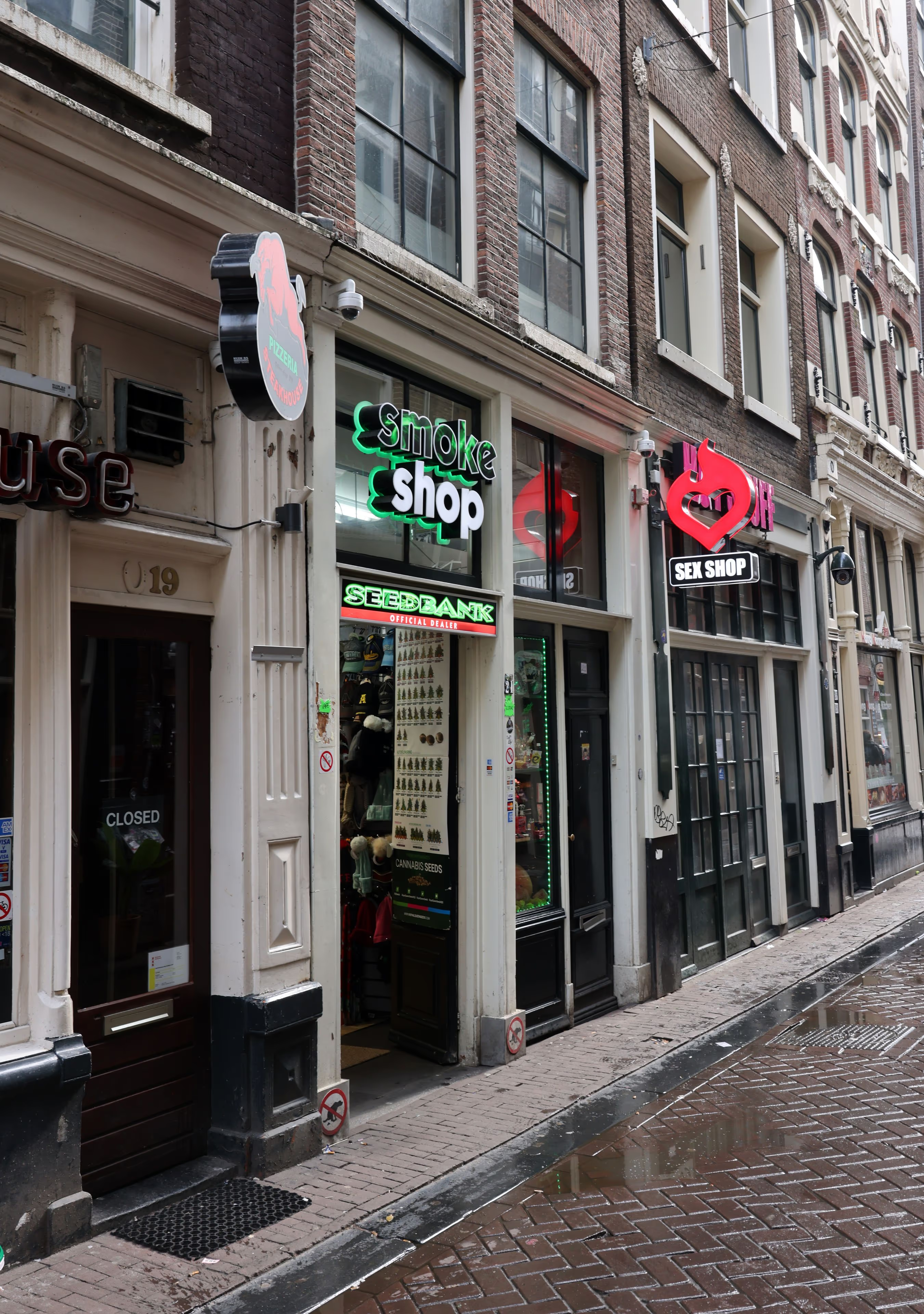
The legal situation in Spain is complex. Possession and consumption of cannabis in private spaces is decriminalized, but not fully legal. Social clubs exploit this legal loophole by operating as non-commercial associations that enable their members to grow and consume cannabis. However, there are strict rules limiting the size of the clubs and the amount of cannabis that can be grown and distributed.
Consuming cannabis in any public place — a beach, a street, a bar terrace, a hotel balcony visible from outside — is a separate matter and is fined under Spain's public safety law, with penalties starting at €601. See our dedicated legal-status guide for the full picture, including driving risks.
Resort-by-Resort: What You'll Actually Find
"Is there a coffeeshop near my hotel?" is the honest question behind most of these searches. There isn't — anywhere on the island — but registered Cannabis Social Clubs are genuinely concentrated in certain areas. Here's the realistic picture by region, based on where verified clubs on this site are actually located:
- Palma de Mallorca — the island's capital has the highest concentration of registered clubs by a clear margin. If you're staying in the city, this is where membership access is easiest to arrange.
- Playa de Palma / El Arenal / Can Pastilla (including the "Ballermann" strip) — despite being the island's busiest package-holiday zone, this area has no open-door cannabis venues; clubs here are private and unmarked from the street, same as everywhere else. Expect nothing resembling a coffeeshop along the beach promenade.
- Magaluf / Palmanova / Santa Ponsa / Calvià municipality — a major tourist hub with registered clubs in the wider Calvià area. Again: private membership only, no walk-in venue, no storefront signage.
- Peguera / Paguera — smaller resort with at least one registered club nearby.
- Alcúdia / Port d'Alcúdia / Muro (north coast) — clubs exist in the wider Alcúdia–Muro area serving the northern resort belt.
- Manacor / Porto Cristo (east coast) — coverage exists for visitors based on the quieter east side of the island.
- Port d'Andratx / the southwest — limited but present coverage for the southwest coast.
Use the club listing above (or the island map) to check what's realistically reachable from where you're staying before you travel — walk-in access does not exist anywhere on this list.
Membership and Access
To join a social club on Mallorca, potential members traditionally needed to be invited by an existing member. After the invitation, they had to pay a membership fee, often charged annually. This fee helps cover the operating costs of the club and allows for the growing and distribution of cannabis among members.
For visitors on a short trip, waiting for a personal invitation isn't realistic — which is exactly the gap the Fast-Track pass exists to close: an honest, same-day access route into a verified club without needing a pre-existing member to vouch for you. See our step-by-step guide on how tourists can join a club for the full walkthrough.
Dos and Don'ts for Visitors
Because the legal model here is unfamiliar to most tourists, a few honest ground rules go a long way:
- Do treat clubs as private, members-only associations — bring ID, expect a check-in process, and respect that they are not shops.
- Do consume only in private spaces (inside the club, or another genuinely private location) — never on the beach, street, hotel balcony visible from outside, or any bar/restaurant terrace.
- Do plan ahead: arranging Fast-Track access before you land is far easier than trying to find a way in on the day.
- Don't expect a walk-in shop, counter service, or a menu board — nothing like that exists on Mallorca, in any resort.
- Don't trust street offers, unsolicited approaches near nightlife strips, or "delivery" contacts advertised online — these carry real legal and personal-safety risk and have nothing to do with the regulated club model.
- Don't drive after consuming — Spanish traffic law has a strict approach to THC and testing, independent of the private/public consumption distinction.
- Don't assume "420-friendly" listings, review sites, or delivery apps reflect Spanish law — they generally don't, and following them can lead you toward exactly the risks above.
Advantages and Disadvantages
Advantages
- Safe and controlled environment for cannabis consumption
- Community feeling and social interactions
- No commercial orientation, focus on quality and safety
Disadvantages
- Limited access for members only
- Legal uncertainties and possible changes in the law
- Membership fees can be high
Frequently Asked Questions
Is there a coffeeshop in Palma or anywhere on Mallorca?
No. Nowhere on the island is there a licensed, walk-in retail venue selling cannabis, in Palma or any resort. What exists instead are private, members-only Cannabis Social Clubs.
Can tourists visit a cannabis club on Mallorca?
Yes, but not by walking in off the street. Clubs are private associations; visitors typically need an existing member's invitation or a same-day Fast-Track pass. See how to join a club.
Is weed legal on Mallorca?
Private possession and consumption exist in a decriminalized gray area; public consumption is fined from €601. There is no legal retail sale. Full detail in our legal-status guide.
Why do Weedmaps or delivery apps show results for Mallorca?
Those platforms are built for licensed US/Canada-style retail and delivery markets. Any Spain-facing listings are generally informational or unrelated to a real, legally operating venue here — there is nothing to legitimately list.
What's the difference between a coffeeshop and a Cannabis Social Club?
A coffeeshop is a licensed Dutch retail shop open to any adult. A Cannabis Social Club is a private Spanish association where members collectively grow and share cannabis for personal, non-commercial use — see the full comparison above.
Can I smoke on the beach or my hotel balcony?
No. Any public-facing consumption — beaches, streets, terraces, balconies visible from outside — is finable from €601 under Spanish public safety law, regardless of the private legal status of club membership.
Conclusion
In summary, social clubs on Mallorca offer an interesting alternative to the well-known coffeeshops in the Netherlands — but they are not the same thing, and understanding that difference before you arrive saves confusion and risk. There is no walk-in coffeeshop, weed cafe, or dispensary anywhere on the island; there is a genuine, members-only club scene that provides a safe and communal environment for cannabis consumption, accessible to visitors through Fast-Track same-day membership. For cannabis enthusiasts looking for an honest, social option, the Mallorca club scene can be a good choice — as long as expectations match the real legal model.
Looking for something closer to a US-style dispensary? See our dedicated guide on cannabis dispensaries on Mallorca for an honest, side-by-side comparison of the club model versus what dispensary-style access actually looks like here.
These clubs vary in size, membership fees, and services offered. Some also offer events and activities for their members.