



Spain’s Balearic Islands will not market the 12 August 2026 eclipse as a tourism draw as authorities prepare 26 viewing zones.

Spain’s Balearic Government and island councils have declined to promote the 12 August 2026 total solar eclipse as an additional tourism attraction, while preparing 26 official viewing areas for an event that could coincide with more than two million people across Mallorca, Ibiza, Menorca and Formentera. The decision, reported by elDiario.es in its account of the eclipse and the islands’ summer population pressure, reflects a calculation unusual for a region whose public institutions have long competed to attract visitors: in the middle of August, the concern is not demand but how to manage it.
The Balearics choose caution during peak season
The eclipse will be visible from Mallorca, Menorca, Ibiza and Formentera, which sit close to the edge of the path of totality. It arrives during the hottest and most crowded part of the Balearic summer, when roads, emergency services and natural areas are already operating under seasonal pressure. Rather than turn the astronomical event into a public tourism campaign, the Balearic Government and the island councils have focused on safety information, traffic management and controlled observation.
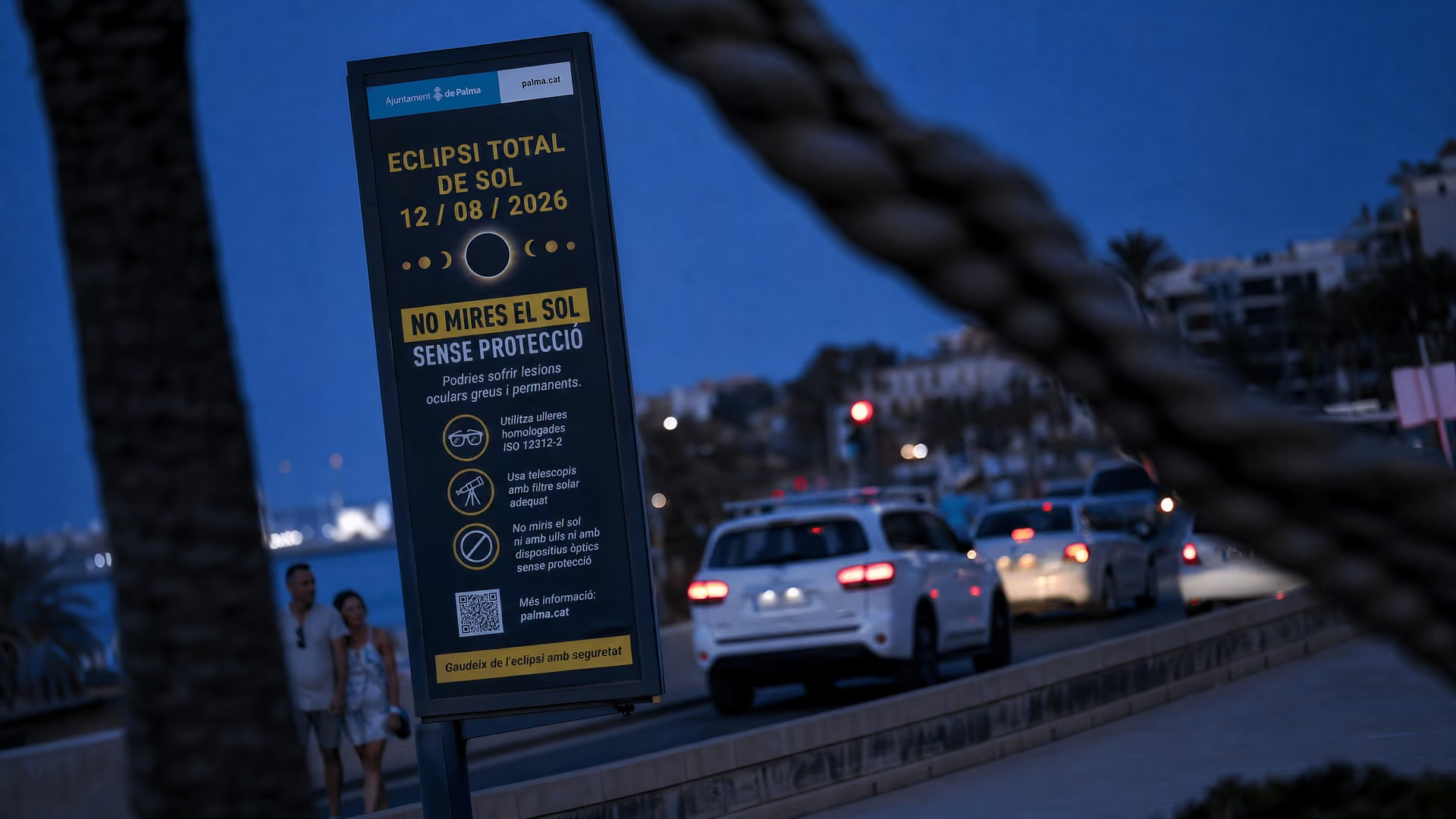
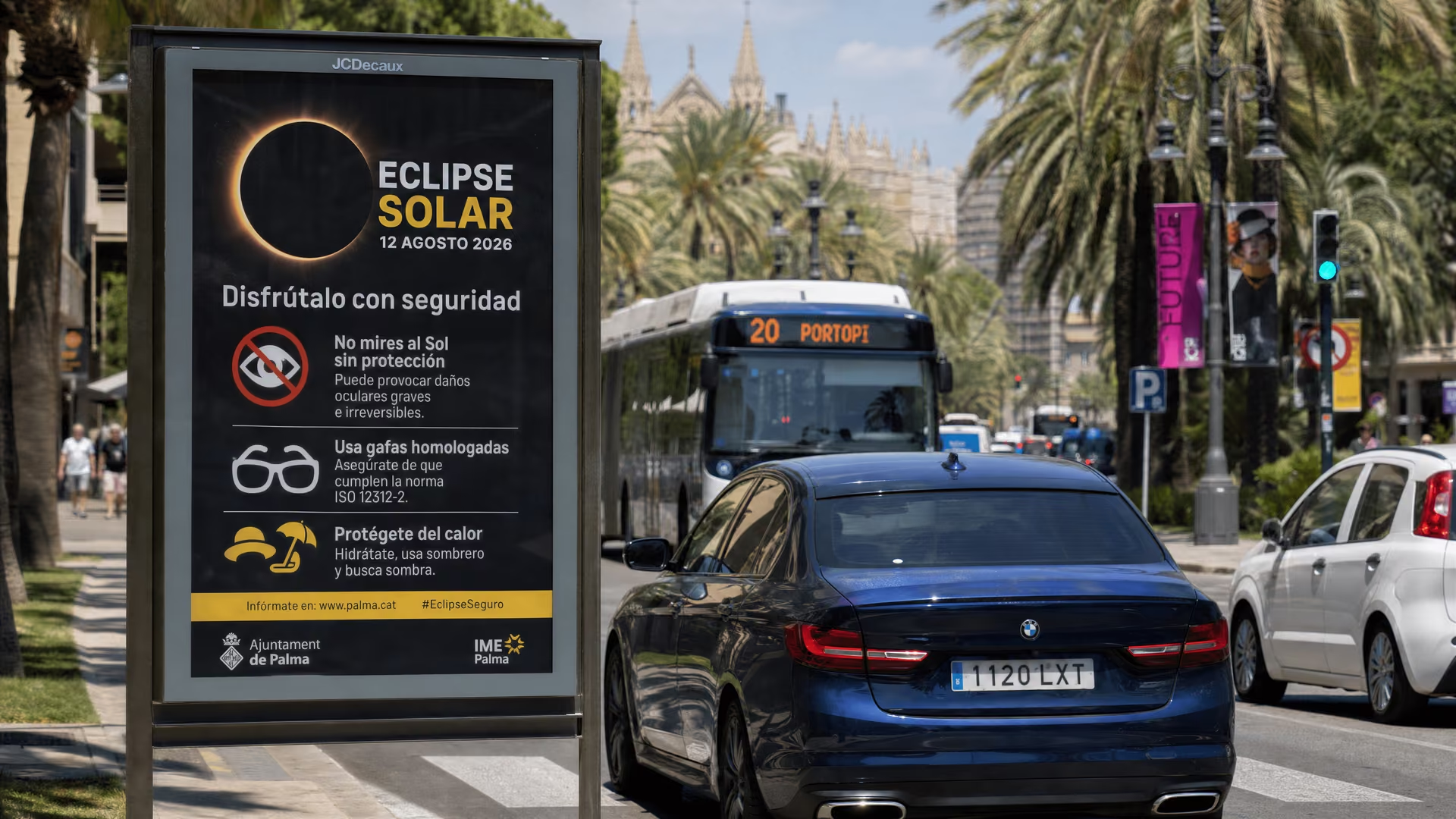
In Palma, public posters show an adult and child looking towards the sky through protective glasses. The advice includes avoiding dangerous observation practices, not driving or operating a boat after drinking, and not lighting fires during the summer. The campaign is presented as a matter of collective responsibility by the Balearic Government and Palma City Council, not as an invitation to travel to the islands.
That distinction matters in an archipelago where the eclipse has already generated strong interest among businesses and some visitors. The public authorities’ position is that the islands do not need an additional reason for people to arrive in mid-August. Their task is to reduce uncertainty about where crowds will gather and to protect access for residents, workers and emergency services. The public information campaign is therefore best understood as a warning about pressure and risk:
A temporary population larger than the resident census
The underlying issue is the scale of seasonal population movement. Data from the Balearic Institute of Statistics cited in the primary report show that more than two million people were present across the islands at the same time between 18 July and 23 August 2025. The archipelago covers almost 5,000 square kilometres and has a resident census of 1.2 million people. The eclipse will fall inside the same high-pressure period.
For the Balearic emergency services, the problem is not simply the number of people but their distribution. People may travel towards coastlines, viewpoints, mountain roads, beaches, lighthouses and other places with limited access or difficult evacuation routes. Pablo Gárriz, the Balearic Government’s director general of emergencies, said the islands could have 40% more people than their registered population on 12 August. He described the additional pressure as similar to the tension already experienced at the seasonal peak, compounded by uncertainty over where people will choose to watch.
The population surge has also become part of a wider political argument about the limits of the Balearic tourism model. A report on Mallorca’s saturation and the eclipse links the islands’ 2025 total of 19 million visitors with concerns about pressure on infrastructure and living standards. The same debate was visible in a recent demonstration in Palma, whose attendance was estimated at 25,000 by the National Police and 70,000 by organisers.
Ibiza’s reported seasonal population pressure (people)
Ibiza provides the clearest island-level illustration in the material published by elDiario.es: its human pressure rises from about 160,000 people to 320,000 at the height of the season. Juan Miguel Costa, the Ibiza island council’s tourism director, said that the eclipse would have been promoted at another time of year, when the aim is to distribute tourism more evenly. In mid-August, he argued, the more sensible option is to keep activity in controlled spaces.
A large safety operation replaces a tourism campaign
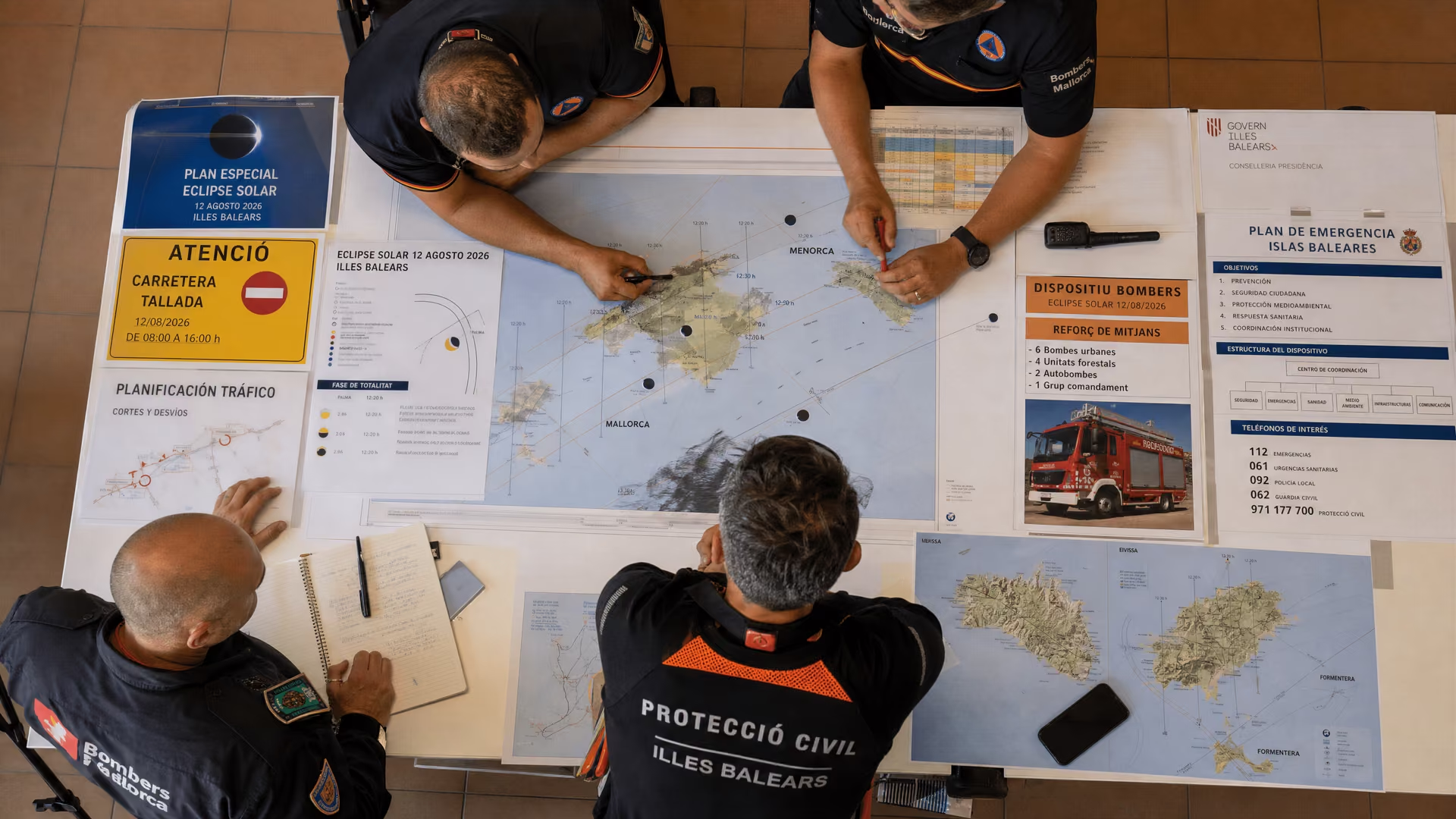
The Balearic Government and the island administrations are preparing an operation built around concentration and access control. The plan includes 26 official observation areas across the four islands, road restrictions near environmentally sensitive locations and a forest-fire response involving 161 forest firefighters. The administration has also made an astronomy application developed by the AstroMallorca association an official source of information about the event.
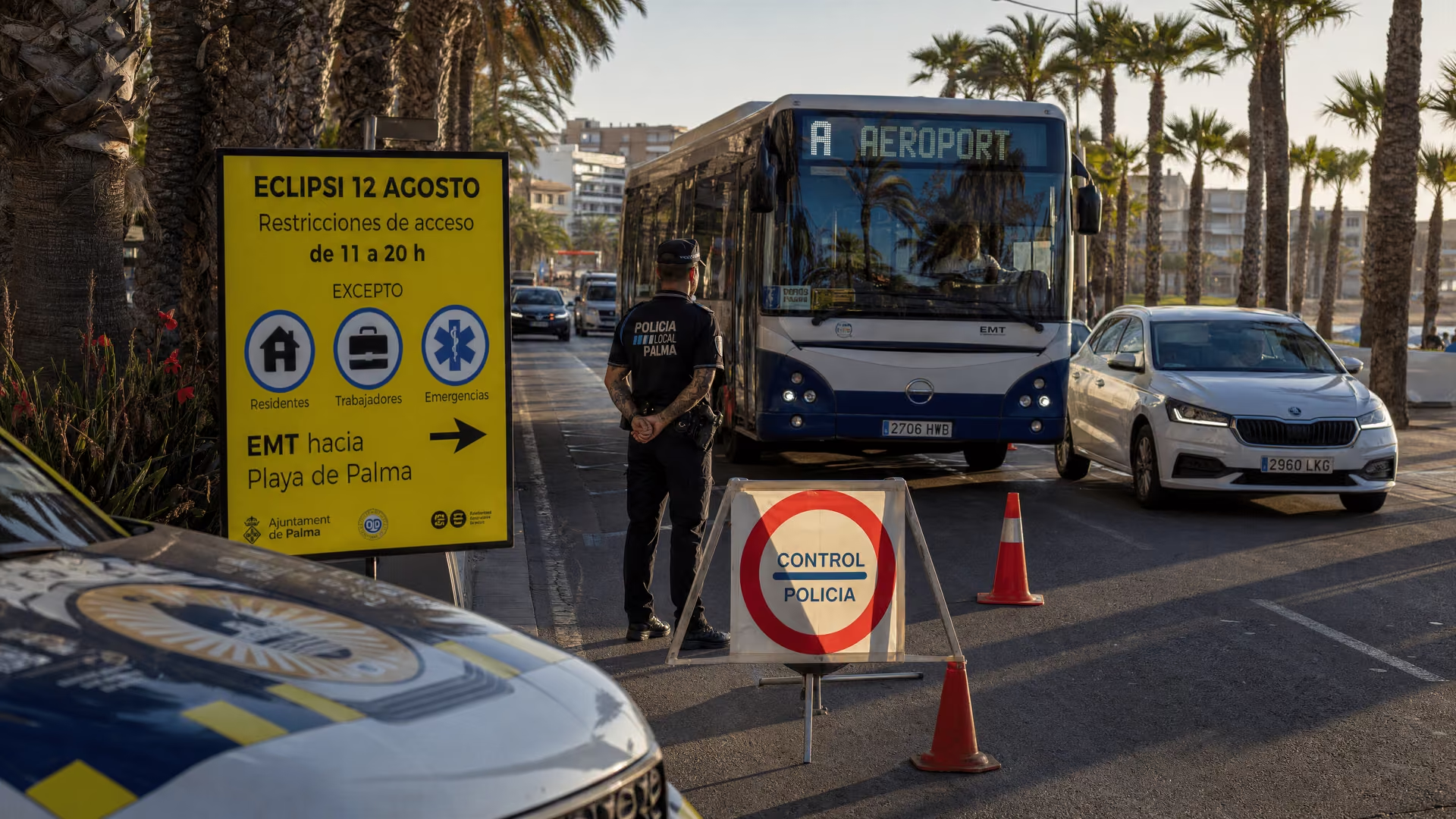
The measures are designed to direct people away from places where large gatherings could be difficult to monitor or evacuate. The Serra de Tramuntana is a particular concern because mountain roads can be narrow, access points are limited and the summer fire risk is high. Broader road controls are expected to operate from around 3pm to 9pm, although the authorities have warned that they could begin earlier. Palma is also planning restrictions in Playa de Palma, with access controls for vehicles that are not linked to residents, workers, public transport or taxis.
The central operational problem can be summarised in four parts:
- Directing observers towards designated locations instead of allowing large, unpredictable concentrations at remote viewpoints.
- Limiting traffic on roads leading to the Serra de Tramuntana and other sensitive coastal, rural and natural areas.
- Reducing the risk of forest fires during a period of high heat and heavy human pressure.
- Keeping emergency coordination and evacuation routes available while informing the public about safe observation.
The official figures show the scale of the response:
The system is already under strain. The added problem is not knowing where people will go.
Pablo Gárriz, director general of emergencies for the Balearic Government
Why the decision has divided opinion
The decision not to promote the eclipse has been welcomed by business groups that regard mid-August demand as already sufficient, but it has also prompted a broader argument about what kind of tourism the Balearics are prepared to receive. Supporters of the policy describe it as a practical response to saturation. Critics see a risk that restrictions and limited access will favour people able to pay for private locations while making public viewing more difficult for residents.
The positions reported in the primary source can be set out as follows:
| Actor | Approach | Reason or concern | Source |
|---|---|---|---|
| Balearic Government and most island councils | No broad tourism promotion; focus on safety and controlled observation | The islands are already at maximum seasonal occupancy and emergency systems are under pressure | Eclipse report by elDiario.es |
| Ibiza island council | No specific promotion in mid-August | The event could add to existing visitor and traffic pressure | Eclipse report by elDiario.es |
| Formentera island council | Promoted an astronomy-focused campaign | The island presents the event as a way to diversify tourism around its recognised night sky | Eclipse report by elDiario.es |
| Environmental and academic critics | Question restrictions that limit general access | Containment may reinforce a more exclusive tourism model | Eclipse report by elDiario.es |
Macià Blázquez, a geography professor, described the institutional emphasis on containment as consistent with what he called the elitisation of Balearic tourism. His criticism is not that the authorities should bring more people to the islands, but that public restrictions could make access uneven. He argued that a resident unable to reach the Serra de Tramuntana because of road closures might be disadvantaged while people with private accommodation or private transport retain alternatives.
Economist Guillem López Casasnovas offered a different criticism, describing the eclipse as another inflated public and commercial expectation. For him, the event has become a test of whether the islands’ response to overcrowding is genuinely about reducing pressure or about presenting a more exclusive image of the destination. The disagreement is therefore less about astronomy than about who gets to use public space during an exceptionally crowded week.
Private businesses are promoting what public authorities declined to market
The absence of a public tourism campaign does not mean that the eclipse has gone unnoticed in the private economy. Bars, hotels, beach clubs, restaurants, nautical companies and nightlife venues have prepared their own eclipse-related events. A separate report on bookings and commercial activity in Mallorca describes calls from as far away as Indonesia and the United States, as well as businesses reopening or adapting their schedules for the date.
That private response is occurring alongside a more cautious position from the hotel sector. The Federation of Hotel Businesses of Mallorca says the eclipse has not significantly changed the island’s overall accommodation market because August occupancy is already high. It reports that only a small number of highly specialised observers booked well in advance and has encouraged hotels to organise activities on their own premises or nearby, reducing unnecessary journeys towards Formentor and the Serra de Tramuntana.
The restaurant sector has warned that the public controls may also have commercial costs. The Balearic employers’ confederation has reported cancellations linked to planned mobility restrictions, particularly around Playa de Palma, where access will be limited during the eclipse period. The concern is not that the islands lack visitors, but that customers with existing reservations may be unable or unwilling to reach certain establishments.
Environmental pressure and the question of equal access
Natural areas under additional pressure
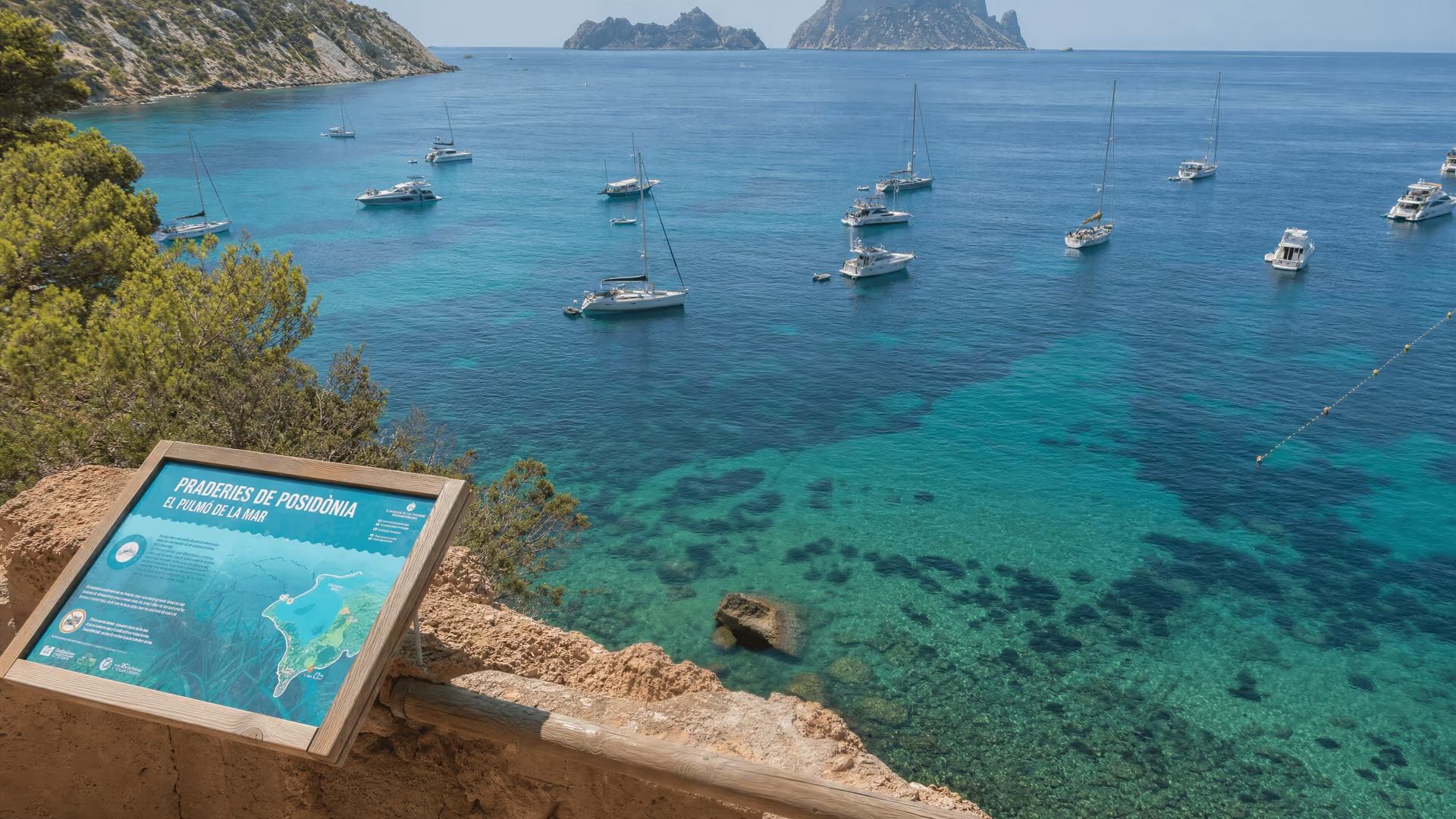
The debate also extends beyond roads and emergency response. Raquel Vaquer-Sunyer, a marine sciences doctor and coordinator of the Mar Balear report, warned that an increase in boats around the best observation points could damage the seagrass meadows around the Pityusic Islands. She pointed to the risks associated with mass anchoring, disturbed sediment, wastewater, fuel and oil discharges, noise and accidents at sea.
Her warning is especially relevant to Ibiza and Formentera, where the desire to find an unobstructed view from the water could add pressure to marine ecosystems already affected by intense seasonal use. The same logic applies on land: a viewpoint may appear spacious on a map but still have limited road access, poor evacuation options or a high fire risk. The government’s preference for official observation areas is intended to make those risks more manageable.
A debate about the tourism model
The eclipse has become a compact expression of a larger Balearic contradiction. The islands remain one of Spain’s most important tourism destinations, yet the summer population can exceed the capacity of systems designed around a much smaller resident base. The resulting pressure is visible in traffic, emergency planning, environmental protection and housing debates, while the economic benefits are distributed unevenly.
For the authorities, not promoting the eclipse is a form of demand management. For critics, it is also a test of whether the public response to overcrowding will protect shared access or shift exceptional experiences towards private and higher-cost settings. Neither side disputes that the islands will be busy on 12 August. The dispute is over how the public sector should respond when an extraordinary event arrives in an already extraordinary season.
Formentera makes the exception
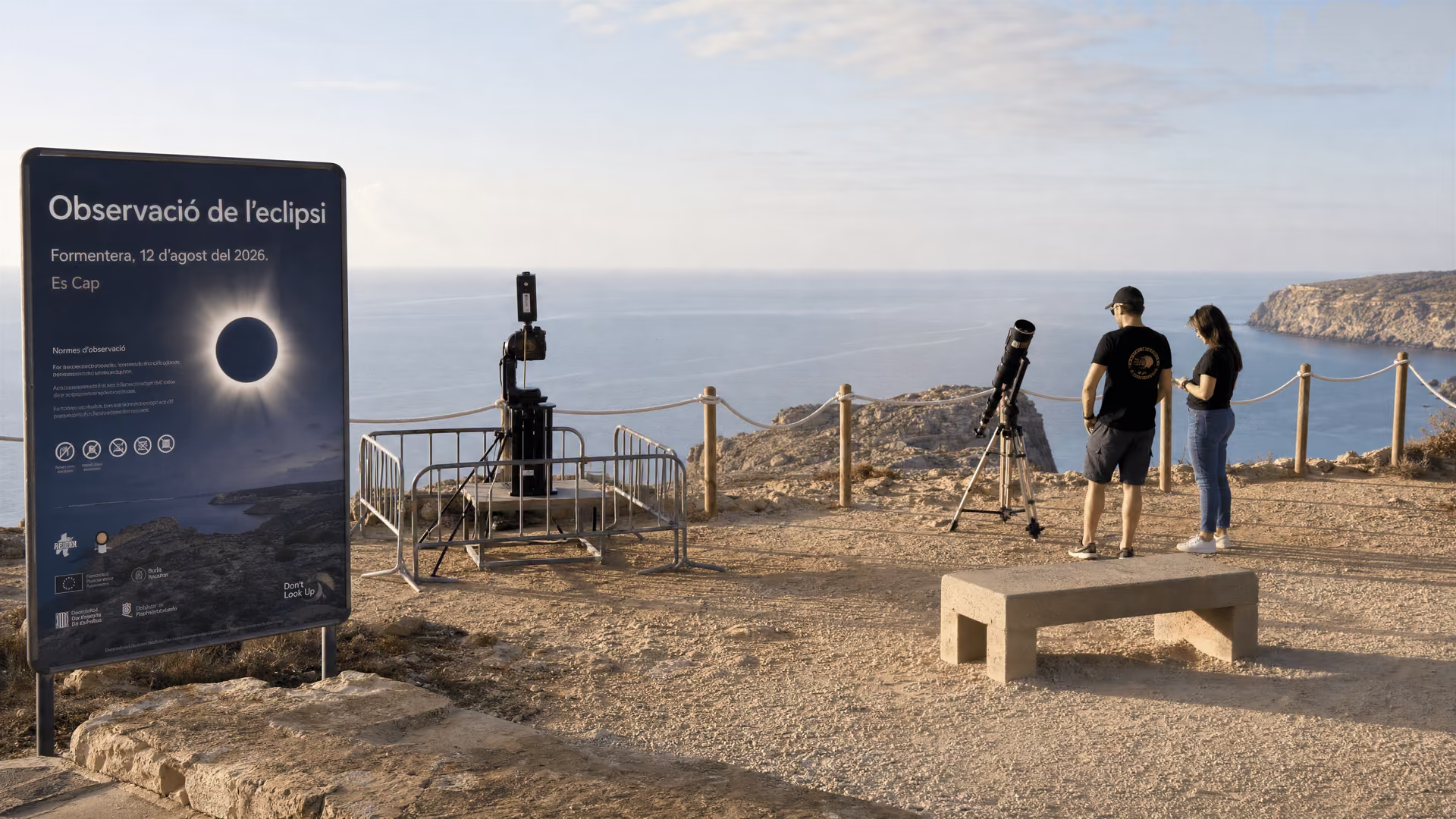
Formentera is the clearest exception to the wider decision. Its island council has promoted an astronomy campaign based on the quality of the island’s night sky and its 2023 Starlight Foundation certification. The campaign presents the eclipse as a possible way to diversify tourism while respecting the territory, rather than as a reason for unrestricted mass arrivals.
The island’s approach is built around a small, defined observation area at Es Cap, with capacity for 500 people. Jordi Alemany, president of the Formentera Astronomical Association, said the island’s limited road network makes it easier to regulate movement than on larger islands. The association has also worked with local authorities on public information and observation planning.
That model illustrates the narrow distinction the Balearic administrations are trying to draw. A controlled astronomy initiative in a small area is different from a campaign designed to bring additional visitors to an already saturated destination. Whether that distinction holds on the day will depend on how many people travel beyond the designated sites, how restrictions are applied and whether emergency routes remain clear.
What the eclipse decision means in the Balearics
Are the Balearic Islands promoting the eclipse as a tourism attraction?
The Balearic Government and most island councils have chosen not to promote it as an additional tourism draw during the August peak. Formentera is the exception, with an astronomy-focused campaign and a controlled observation area.
Why are the authorities limiting promotion?
The islands are already under heavy seasonal pressure. Authorities are concerned about traffic, fire risk, environmental damage, emergency access and uncertainty over where large groups may gather.
How many official observation areas are planned?
The Balearic Government and island administrations have identified 26 official observation areas across Mallorca, Menorca, Ibiza and Formentera, with an initial combined capacity reported at about 300,000 people.
Will private businesses still organise eclipse-related activities?
Yes. Hotels, restaurants, bars, beach clubs and other businesses have prepared their own events and received eclipse-related enquiries. These private activities remain separate from public tourism promotion and are subject to the authorities’ safety and mobility measures.
The Balearic Islands’ eclipse policy is a sign of a destination trying to manage its own success. Mallorca, Ibiza and Menorca are preparing for an exceptional event without publicly encouraging another wave of arrivals, while Formentera is testing whether a tightly controlled astronomy initiative can bring diversification without reproducing the pressures of peak summer. On 12 August, the success of that approach will be measured less by the number of people who see totality than by whether residents, visitors, emergency teams and protected landscapes can share the islands without a wider breakdown in access and safety.
Sources
- Un eclipse sin promoción turística en las islas que duplican su población en verano (eldiario.es)
- “Mallorca, al límite”: Baleares no quiere ser destino turístico para el eclipse (elpais.com)
- La fiebre por el eclipse dispara las reservas en bares, hoteles y 'beach clubs' de Mallorca: "Nos llaman de Indonesia" (eldiario.es)